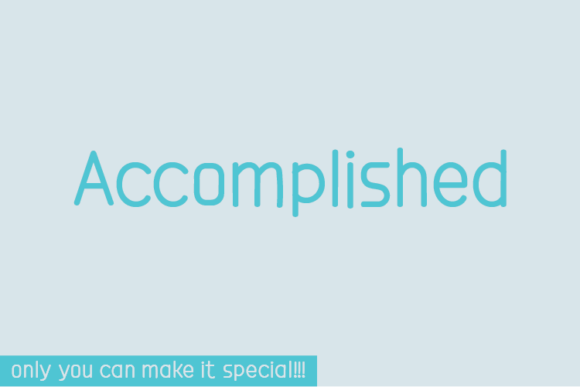
Accomplished: A Natural Handwritten Font for Authentic Branding
Accomplished for Logo Design: A Unique Handwritten Touch
When I first opened the brand board for a new local café rebrand, I knew I wanted something that felt warm and personal. I tested Accomplished on the logo concept and was immediately drawn to its organic flow. As a script handwritten font created without altering a single node in each character’s indentation, it maintains a natural, almost spontaneous feel. This quality makes Accomplished stand out in logo design, especially when the brand’s personality leans toward the artisanal or handcrafted.
Accomplished on Packaging Mockups: Adds a Personal Note
I placed Accomplished on a mockup of the café’s coffee bag packaging, and the result was surprisingly elegant. The font’s subtle imperfections gave it a sense of authenticity—like a real person had written it by hand. For packaging design, this can be a powerful tool to communicate sincerity and craftsmanship. It worked especially well on the “small-batch roasted” tagline, giving it a handwritten warmth that felt genuine. However, I wouldn’t recommend it for long product descriptions or small-print legal text—it’s best used for short, impactful phrases.
Accomplished in Social Media Graphics: Perfect for Quotes and Captions
As a handwritten font, Accomplished shines in social media content. I tested it in a few Instagram post templates for a wellness brand and found it ideal for quote overlays and short captions. Its character spacing and natural rhythm make it highly readable at a glance, which is crucial for fast-scrolling audiences. Pairing it with a clean sans serif font for body text created a nice visual hierarchy without overwhelming the layout. For social media graphics, Accomplished is a great accent font that adds personality without sacrificing clarity.
Accomplished for Business Cards and Stationery: Adds a Human Element
I also used Accomplished in a business card design for a local florist. The font’s soft curves and uneven baseline gave the design a human, approachable feel—perfect for a brand that wanted to emphasize its personal service. It worked well at a small size, though I’d advise against using it for anything smaller than 10pt. As a premium font choice for stationery and business cards, it brings a sense of warmth and intimacy that many script fonts can’t quite match.
Accomplished in Web Design: Works Best as a Display Font
In testing Accomplished on a homepage hero section, I found it performed best as a display font. It looked stunning in a large headline banner but became less effective when scaled down for subheadings or body copy. The font’s character spacing and slight irregularities can cause readability issues in longer paragraphs. However, as a headline font or logo font, it brings a level of charm and authenticity that few other fonts offer. If you’re using it on the web, make sure it’s paired with a strong webfont license and a highly legible supporting typeface.
Font Pairing Tips with Accomplished
One of the biggest challenges with a creative font like Accomplished is finding the right balance in typography. I found the best results came from pairing it with a minimalist sans serif font like Montserrat or Lato. This contrast allowed Accomplished to shine without overpowering the design. For more formal applications, a serif font like Playfair Display created a classic, editorial feel—ideal for luxury or lifestyle branding.
What to Watch Out For When Using Accomplished
While Accomplished brings a lot of personality to the table, it’s not a one-size-fits-all solution. It works best in brand identity projects that lean into craftsmanship, creativity, or personal connection. Avoid using it for long-form content, technical documents, or corporate branding where precision and neutrality are key. Also, always test the font at different sizes and in various formats—print, screen, and signage—to ensure it maintains its legibility and charm across all commercial design assets.
Checking Licensing and File Formats for Commercial Use
Before using Accomplished in client work or packaging design, be sure to review the font’s licensing agreement. Some premium fonts have restrictions on how they can be used, especially for merchandise, print-on-demand products, or digital templates. Make sure you have access to the necessary file formats—OTF, TTF, WOFF—for both print and web use. If the font includes ligatures, alternates, or swashes, explore those options to enhance your design without overcomplicating it.